How to help your child learn to read without pressure.
Now you can: Understand reading development and support your child with confidence.
It’s no longer optional.
In the early elementary years, reading is the skill everything else depends on.
And it’s being measured much more carefully in school.
Giving your child academic success is a great gift.
But early reading also helps them in many other ways. It helps emotionally, with critical thinking, and with positive outcomes in every area of life.

There are plenty of resources encouraging you to read to your child. But maybe there’s something else — finding out exactly how to help your child learn to read.
Most parents aren’t educators. We didn’t study childhood development, and we’re doing our best to teach our children how to read the way we learned.
There’s a big change sweeping the nation, and you can still jump on the train and find out how things are different now.
What’s Changed?
For many years, reading development was treated as something that would happen naturally with time, practice, and exposure to books. While those things still matter, research has shown that successful reading depends on specific foundational skills being developed early.
As a result, schools now place earlier expectations on reading competency. Children are expected to build these skills within certain developmental windows so they can successfully learn from reading in later grades—not just learn to read.
It changes — from learning to read in Grades K-2, to reading to learn starting in Grade 3.
Parents haven’t yet been told about this shift. Not because it’s a secret, but because it’s brand new and still being implemented. Awareness helps close that gap.
AWARENESS? Of what?
Awareness of new expectations: This development that’s coming to your school. (And it’s a good one.) Teachers will be held to a more difficult standard: Completing a certain amount reading education thoroughly by the end of second grade.
Beginning in third grade and certainly after that, reading is the primary way students will receive their education. If they can’t read, they will fall behind.
And let’s be clear: This isn’t an alarm bell. It’s an invitation!
- If you’ve felt like an outsider in your child’s education,
- If you aren’t clear on why lessons are structured the way they are,
- If you feel like your own education didn’t prepare you,
You’re finally invited to a seat at the table.
You’re a participant and a contributor with knowledge that gives you exactly what you need to guide your child as they learn to read.
Start Here: The Shift Parents Don’t Realize Has Happened
In recent years, the way children are taught to read has changed.
Not because parents failed.
But because research clarified how reading truly works—and much of that information never reached families at home.
Most parents were taught to focus on books, practice, and encouragement. Those things still matter—but they are no longer the whole picture.
Without awareness of the foundational skills that come first, parents may not notice early gaps until reading suddenly feels hard.
By the time struggle is obvious, confidence has often already taken a hit.
Why Awareness Matters More Than Effort
Parents are doing their best.
They read bedtime stories. They practice sight words. They cheer progress.
Yet many children still struggle—not because parents didn’t try, but because effort without understanding has limits.
When parents don’t know the details of reading skills:
Early warning signs are easy to miss
Normal development can be mistaken for failure
Real gaps can go unnoticed until later grades
Help often begins after frustration sets in
Awareness changes the timing—and timing matters in reading development. The earlier we see something, the earlier we can act!
The Change: What Reading Awareness Really Means
Reading awareness simply means understanding how children learn to read—step by step—so you can support them with confidence instead of fear.
When parents gain awareness, several things shift:
Reading struggles stop feeling mysterious or personal
You understand what skills come before fluent reading
You know what to watch for—and what not to panic about
You can partner with teachers instead of feeling powerless
This isn’t about turning parents into educators.
It’s about giving you clear, parent‑friendly insight into the building blocks of reading—so your support at home actually matches what children need.
In other words, you’ll be given actual information that will help you know how to teach your child how to read.
What This Series Gives You
The Reading Awareness Series here on the blog walks parents through early reading development using plain language, practical examples, and encouragement—not academic jargon.
Inside the series, you’ll learn:
How children move from hearing sounds to reading words with understanding
Why phonics matters—and what it really looks like in everyday life
What reading milestones actually mean (and when to be patient)
How to support reading at home without pressure or overwhelm
Why joy, confidence, and consistency matter just as much as instruction
Every post is written for parents who want to help—but don’t want to feel talked down to or alarmed.
The Result: What Changes When Parents Have Awareness
When parents understand how reading develops, something powerful happens.
Fear turns into confidence
Guessing turns into purposeful support
Pressure gives way to encouragement
Reading time becomes calmer—and often more joyful
Children sense that confidence.
And parents begin to realize they were never failing their child—they just needed to understand the process.
A Gentle Note About Expectations
This series is designed to support, not replace, classroom instruction.
It aligns with the Science of Reading while remaining intentionally parent‑friendly. It’s not a curriculum. It’s not a diagnosis tool.
It’s a bridge—between what schools teach and what parents can confidently reinforce at home.
This puts you and your child’s teacher (and your child) on the same team. No more being intimidated by educational terms. Because every concept gets explained in ordinary human language.
Start with awareness.
Explore the Reading Awareness Series and gain the clarity you need to support your child’s reading journey—one step at a time.
Along the way you’ll get actual lists of things you can do, printable resources, links to more information, and a ton of encouragement.
Together we will give your child the keys to success in school and career, simply by being aware!

The Reading Awareness series contains bite-sized pieces of information so that you can easily understand what you can do as a parent to help your child succeed. 6 posts, each focused on a single aspect of awareness. There are printable resources for you to download. Everything you need to get started on the journey of how to teach your child how to read!
Helping Your Child Learn To Read At Home
And if you’re looking for ways to set up your “homework success” there’s a topic that can totally change how you view something that most people hate. Ways to make homework not only bearable but actually pleasant.
Also some tips on how to set up your kitchen for kids that will relieve a lot of frustration. (You know what I’m talking about. 😉 )
Why?
Why Am I Doing This?
Because I see you. You’re burning that candle at both ends. Parenting is more consuming than you expected, and more important. Everybody has criticism for you, handed out frequently.
I never want to sound that way. Because I heard it, too. The unwelcome advice, the criticism, and the pessimism. I felt the doubt and the worry.
The truth is: Education is the big thing happening for your child on a daily basis. It should be exciting and building and happy. Not a struggle. That’s the first reason. To tell you it’s possible and positive.
And second, because I stumbled on this whole big change in education completely by accident. Each step led me further into this decades-long saga. It’s too important not to share, and too big to unload on a single page.
If you’re ready to give that purposeful support to your child and truly understand exactly how to do it, give the first topic in the series a look: K-2 Reading Matters: What Every Parent Needs To Know.
Imagine this:
You want your child to look in the mirror and see an eager learner– a strong, steady student who is always ready for the next step.
Loving To Read
One important factor in all of this needs to be said: Learning to read is not an independent activity. It’s a together activity. It becomes independent only when they reach stage 5 in those building blocks.
So do together. And there’s no rule about how you do it. Do what works for you, for your child. If something you try doesn’t catch their interest, try something else. Let them choose books. Check out recommendations, go to the library, or borrow from a friend.
Make it cozy, and funny, and valuable. They really do want your attention and your time.
So reading together is solving all kinds of problems, and creating all kinds of healthy habits.
Are you worried your child isn’t interested in reading? It’s easy to compare and get discouraged. Especially if you feel like other students are moving ahead faster. Don’t worry. Watch the video I mention in a second, and you’ll find out the average age for learning to read is closer to 8 than 5. That’s a huge thing to consider. Pretty much assures you you’re not behind. You just need those first steps laid out for you.
Right now: The best thing you can do for your child is to take small steps to create a love for reading. A love for story, a love for books and laughter and rhyming and all that stuff.
Also important: Communicate with your child’s teacher. We often feel frustrated by schoolteachers, but sometimes it’s because we are the amateurs. Which no one wants to be.
Teachers have so much knowledge, so much pressure to accomplish tasks, and so much fatigue. Step into their world for a minute. The demanding days, the expectations, and the challenges. The victories and the disappointments. Make it your goal to team up to help your child.
Ask for ideas. Ask for resources. Ask if they’ve noticed anything that would be helpful to you at home.
Parent Resources
If you’d like information in video format, look no further than Your Child Is Not Behind from Not Consumed. She explains age-appropriate milestones, gives activity ideas and has many more resources to offer.
Check out Reading.com for their topics and even their reading lessons.
For years, parents have used Hooked on Phonics to give a boost to their young readers.
My own printable explanation of the building blocks of learning to read is now available. This explains the process.
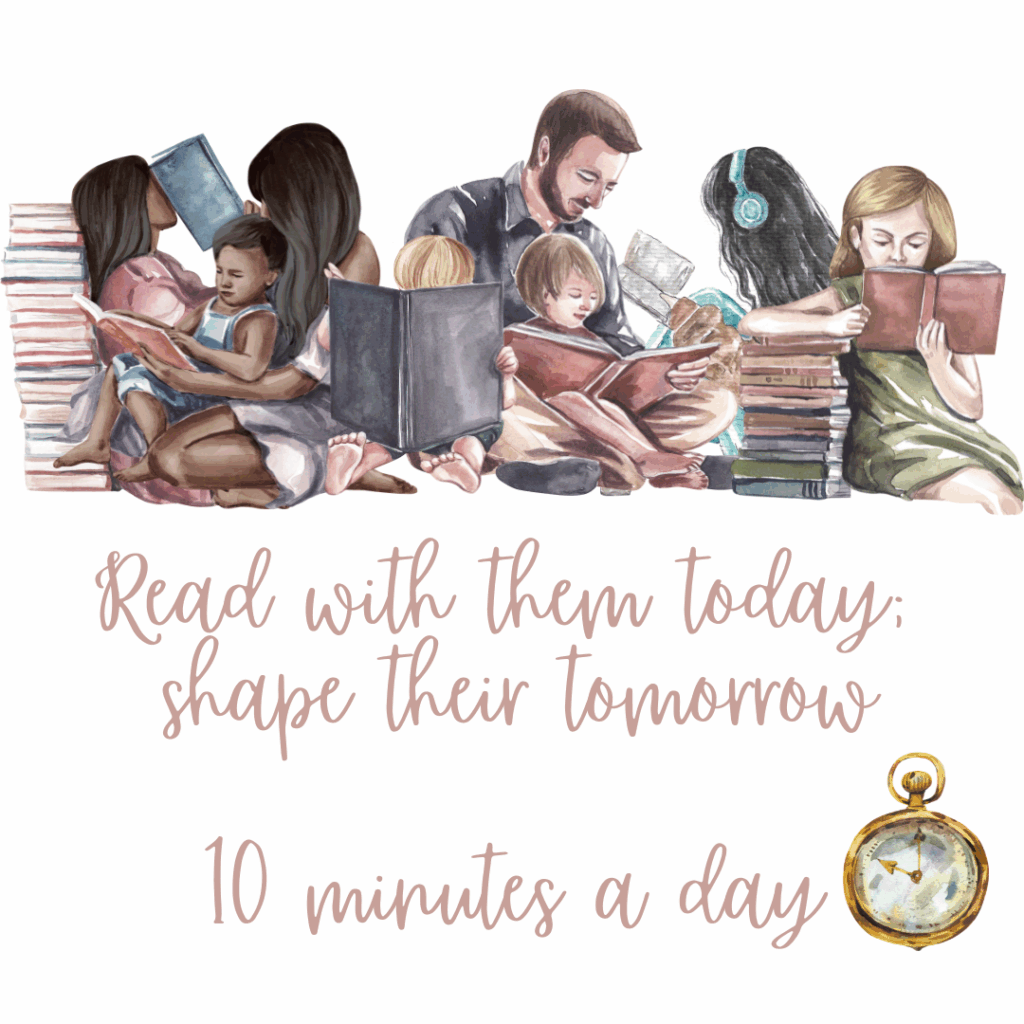
Read. Just do it. 10 minutes a day. You won’t believe what happens.
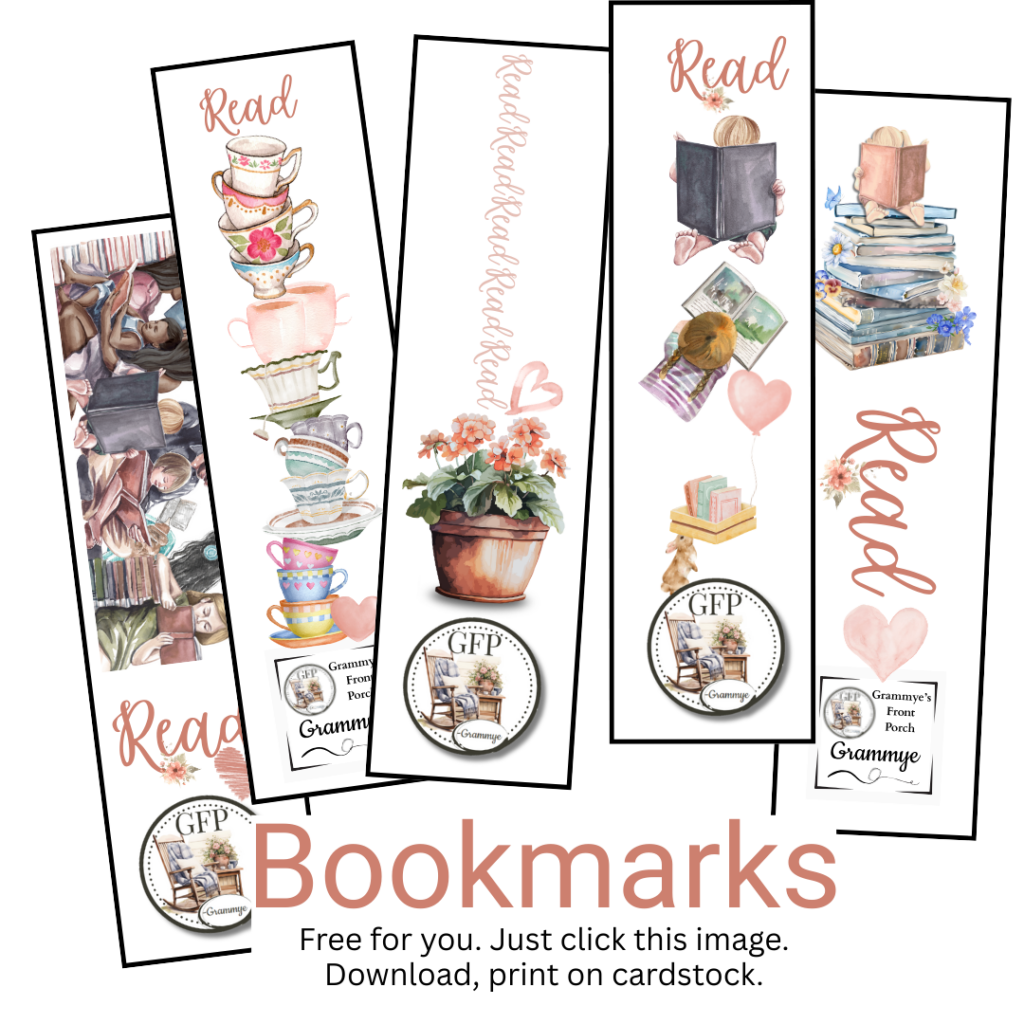
Want free bookmarks? Click the BOOKMARKS image below. Download, print, cut apart, enjoy.
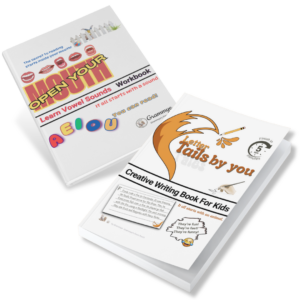
I also have fun workbooks you can enjoy at home that will boost the “fun” factor.
“Open Your Mouth” reinforces vowel sounds with instruction and practice.
“Letter Tails by you” invites your child to tell a silly story for each letter of the alphabet.

By the way, 😎
Some of the products mentioned as links on this page are affiliate links. That means a merchant may give me a tiny reward if you buy something I recommended to you. Tiny rewards like that, plus the sale of my own products, help to reduce the ongoing cost of the blog. (Or, as my husband calls it, my expensive hobby. 😉)
Find out more about that here.
Thank you for visiting! At GFP company is always welcome!
 If you liked this topic, feel free to
  share
share  on Facebook or Pinterest, or send a link to a friend.

Are you on Pinterest? That is a crazy fun place! You can find so many helpful things. Take a look at what I’ve saved for you! A lot of things that never make it to the blog. Here are my Pinterest pins, and I have lots of categories/boards if you’re looking for something specific.
-Grammye
New here?
I’m Grammye, and I’m collecting and sharing ideas that can help you embrace the life you have.
When things are difficult, come here to refresh and relax. We’ll have coffee and talk.
You’re invited
to the neighborhood of GFP.
Accept by signing up
and I’ll send you a letter right away.
Subscribing to GFP is just like getting a magazine. Except it’s free! You won’t be asked for any payment information.
So say yes, then check your junk/spam mail in case the confirmation gets lost on the way!
This post may contain affiliate links. That’s a good thing. It means if you purchase a product I’ve highlighted, the seller may compensate me for that promotion. I love to share products that are a good value and make life easier. Those little commissions may add up, and can help to offset the cost of running the blog. Or maybe even create a little income. Click here to learn more about this.