
February 10, 2026
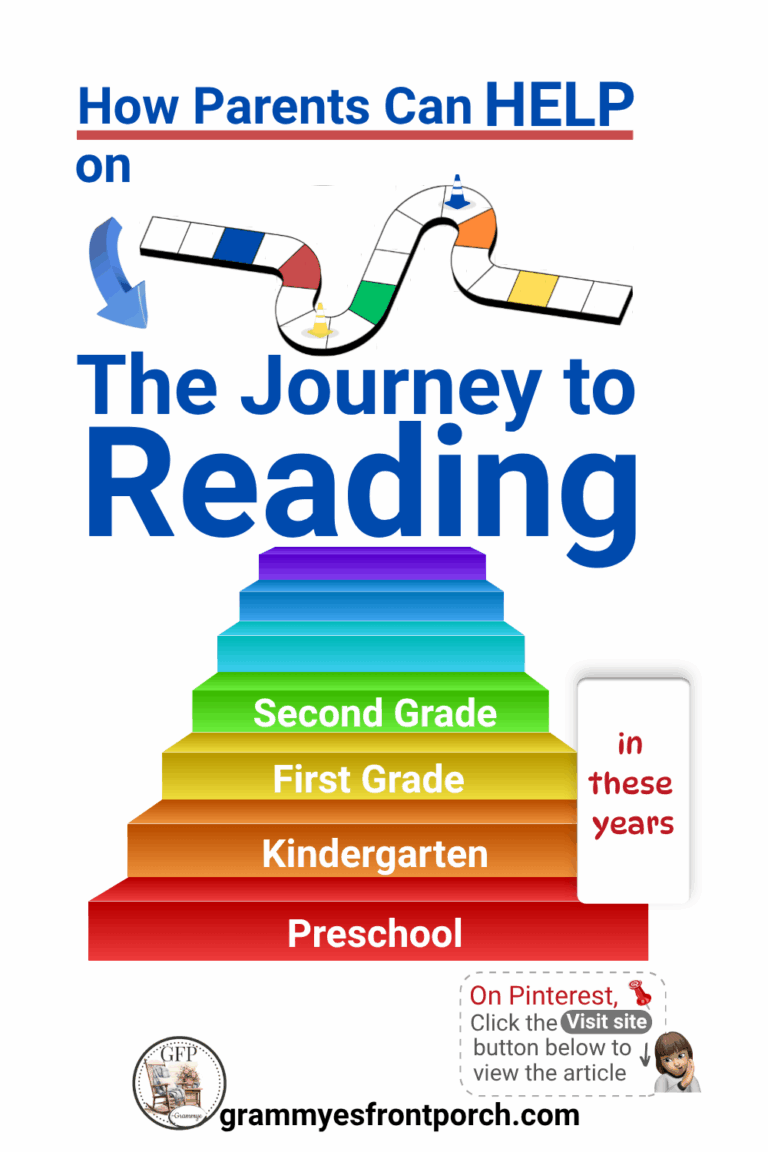
Teachers remind us that children learn in different ways. And parents are in exactly the right position to bring in those different methods. While they are “learning to learn,” you can make reading fun for your young reader!
Hang on: I want to say this gently before we go any further: the purpose of this series is not to criticize teachers, schools, or families, nor is it to suggest that parents should take on the role of classroom instructor. Reading education is a complex field, and thoughtful educators do not all agree on every method or approach.
My hope is simply to help parents understand how reading skills develop over time — and why that understanding is becoming increasingly helpful as schools place closer attention on reading milestones and progress. With a clearer picture of what children are learning and when, parents can partner with their child’s school with confidence, recognize growth without panic, and support their children in small, meaningful ways at home — without pressure, fear, or guilt.
At its heart, this series is meant to bring parents, teachers, and children onto the same page, working together toward confident, capable readers.
Learning to Learn: How Little Extras at Home Make Reading Click
If you’ve been following this series, you already know how much is riding on early reading skills. But today I want to zoom out for a minute and talk about something bigger — something that affects every subject your child will ever study:
Children first learn how to learn.
And they learn in more ways than one.
School gives children structure, exposure, and trained teachers.
Home gives them repetition, encouragement, and confidence.
And when both work together — even in small ways — children build the “learning muscles” they need for life.
They don’t have to understand all that.
We just know that they are learning to learn, and we are making reading fun for young readers.
Learning Happens Everywhere
Children are not limited to learning only during reading groups or phonics lessons.
They learn when they:
- Hear you explain a recipe
- Sing silly songs
- Play with magnetic letters on the fridge
- Ask questions in the car
- Tell you a story from their imagination
- Read labels in the grocery store
- Notice patterns, rhythms, rhymes, and shapes
This is all real learning.
And what’s more — when you give them tiny opportunities to explore words, sounds, and letters in natural, everyday moments, you are strengthening their ability to learn anything.
This is why parent involvement doesn’t have to look like long study sessions or rigid schedules. It can be five minutes here, seven minutes there, or something fun you pull out once a day.
Take it easy, making reading fun. For young readers, every single letter (and every single word) is a step forward.
A little bit goes a long way.
Why Reading Especially Needs These “Little Extras” to Make Reading Fun
Reading is unique among early skills because:
- It doesn’t grow automatically with age
- It relies on repeated exposure
- It requires the brain to connect sounds, shapes, patterns, and meaning
- It becomes easier — and more fun — with practice in different settings
Some children catch on in the classroom.
Others need a different angle, a different voice, or a different pace.
This is where home steps in beautifully… because the parent’s voice, patience, and encouragement can unlock something the classroom didn’t have time to reach.
And that’s not a criticism of teachers — it’s simply the beauty of partnership. Your child’s teacher may have 20 or more students with learning goals that must be met.
When you become involved in the lessons, you are signaling to your child that their work is interesting and valuable. And you’re signaling to the teacher that you are nudging your child toward success.
If every parent supported their student’s learning at home, the class could celebrate their accomplishments together and move forward.
Make Reading Fun: Learning to Read by Learning to Play
Fun accelerates learning.
When phonics is playful — when it feels like a game, a puzzle, or a colorful adventure — children try harder and stick with it longer. They begin to discover that reading isn’t just a school subject… it’s a doorway.
Your job is not to reteach your child everything.
Your job is to sprinkle fun into the spaces where learning feels heavy.
That’s “learning to learn.”
And it’s surprisingly simple.
Learning to Learn — Reading through Fun Workbooks
When I started creating reading and writing workbooks for Amazon, I wanted something that would:
- Make sounding out words feel like a game
- Break phonics into tiny steps children love
- Use pictures and patterns to make words stick
- Give parents an easy, low-pressure way to help
- Build confidence — the kind that spreads into every subject
It’s not complicated. It’s not overwhelming. It’s tiny steps that reinforce skills.
Workbooks are tools you can use in small doses that add up to major reading gains. A page here, a page there, and those sound patterns are getting presented. Decoding, blending, and vocabulary-building.
Whether your child is struggling, catching up, or you simply want to give them a strong foundation, your few extra minutes can truly matter.
Because reading isn’t just a skill — it’s an essential. That’s right. You really want to do everything you can to help them read.
This is the final post in our series. Thank you for sticking with me. The purpose is to really reach parents with this information, and provide ways to invest in their children’s future.
Why is this the time to do that? Because of the big changes coming to your school.
Reading Awareness — The Big Change
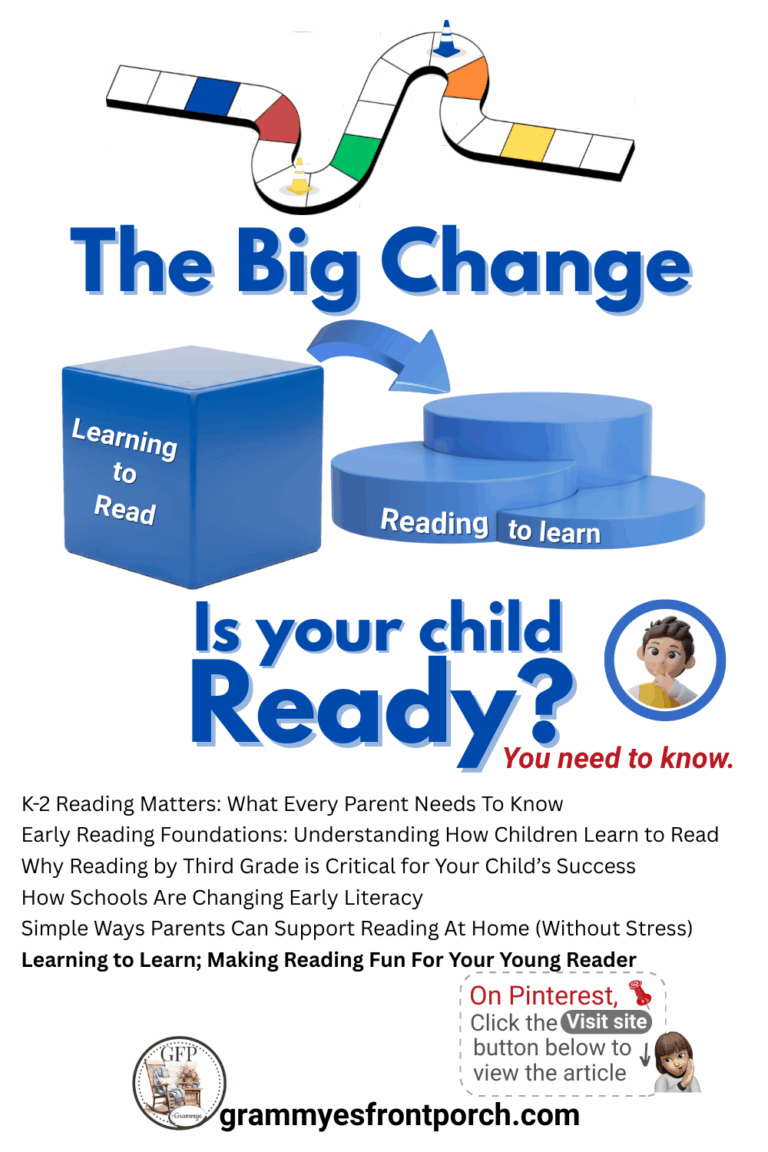
This series, The Big Change, was designed to show you two changes you need to know about.
First, the “change” in third grade. In many states, this change requires your child to be reading at grade level to advance to fourth grade.
Second, the “change” in curriculum that is sweeping the nation, returning to a building-blocks phonics-based instruction so that children can actually read, by understanding letter sounds. (Not guess words by looking at the pictures.)
If you missed any of the posts, please go back now and enjoy them!
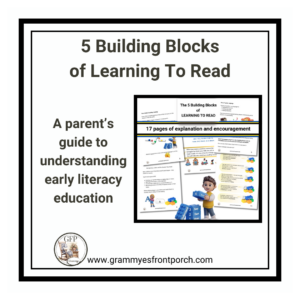
The free download below is a gift for you (no sign-up required), The 5 Building Blocks of Learning To Read. Not only does it explain the “educator talk” well, but it offers you plenty of resources — ideas, websites, and more.
Make Reading Fun For Young Readers
Wondering what you can do today?
Read with your child. Read a good story, or watch your child read. Smile, relax, and have fun. So valuable.
Here are the posts in this series. If the title is bold, it’s been published and you can access it with just a click. 😊
- K-2 Reading Matters: What Every Parent Needs To Know
- Early Reading Foundations: Understanding How Children Learn to Read
- Why Reading by Third Grade is Critical for Your Child’s Success
- How Schools Are Changing Early Literacy
- Simple Ways Parents Can Support Reading At Home Without Stress
- Learning to Learn; Making Reading Fun For Your Young Reader (The post you’re reading right now!)
By the way, 😎
Some of the products mentioned as links on this page are affiliate links. That means a merchant may give me a tiny reward if you buy something I recommended to you. Tiny rewards like that, plus the sale of my own products, help to reduce the ongoing cost of the blog. (Or, as my husband calls it, my expensive hobby. 😉)
Find out more about that here.
Did you actually stick around for all six posts? Aw, You. 💖
Parents of Kids in Grades K-2
Why the passion?
Because it’s exciting.
Because it’s here — now.
Because reading is necessary for everything. And if we don’t support the learning when it’s being offered (grades K-2), the window closes fast. When your child’s teacher reviews reading progress with you, it’s super important.
Reading together at home is a proven difference-maker. Reading together daily is taking a giant step for your child.
And that’s a way you love them.
Reading and phonics workbooks are amazing. Discover it all together, the building blocks to the joy of reading.
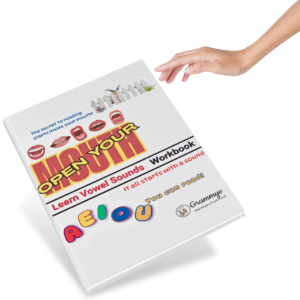
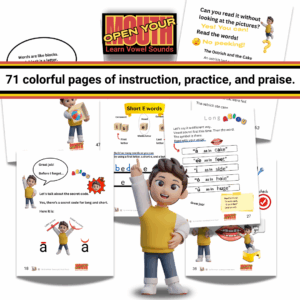
Take a look at my fun workbook, Open Your Mouth, if you’re ready to get started. The cute little guy in some of the pictures on this page is your child’s host for a pretty wacky journey.
Thank you for visiting! At GFP company is always welcome!
If you liked this topic, feel free to
share
on Facebook or Pinterest, or send a link to a friend.

Are you on Pinterest? That is a crazy fun place! You can find so many helpful things. Take a look at what I’ve saved for you! A lot of things that never make it to the blog. Here are my Pinterest pins, and I have lots of categories/boards if you’re looking for something specific.
-Grammye
New here?
I’m Grammye, and I’m collecting and sharing ideas that can help you embrace the life you have.
When things are difficult, come here to refresh and relax. We’ll have coffee and talk.
You’re invited
to the neighborhood of GFP.
Accept by signing up
and I’ll send you a letter right away.
Subscribing to GFP is just like getting a magazine. Except it’s free! You won’t be asked for any payment information.
So say yes, then check your junk/spam mail in case the confirmation gets lost on the way!
This post may contain affiliate links. That’s a good thing. It means if you purchase a product I’ve highlighted, the seller may compensate me for that promotion. I love to share products that are a good value and make life easier. Those little commissions may add up, and can help to offset the cost of running the blog. Or maybe even create a little income. Click here to learn more about this.