
January 27, 2026
Most states in the country have completely changed their reading approach in the last few years.
And this change — it’s the one we have been waiting for!
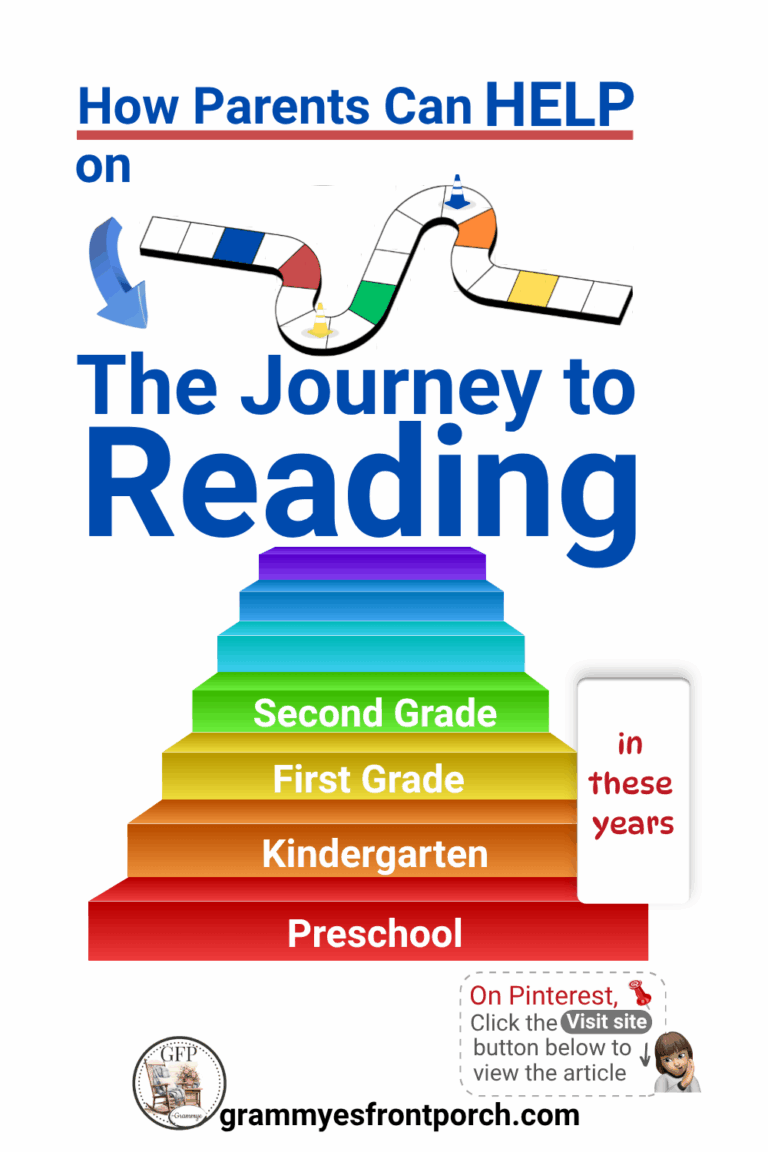
Hang on: I want to say this gently before we go any further: the purpose of this series is not to criticize teachers, schools, or families, nor is it to suggest that parents should take on the role of classroom instructor. Reading education is a complex field, and thoughtful educators do not all agree on every method or approach.
My hope is simply to help parents understand how reading skills develop over time — and why that understanding is becoming increasingly helpful as schools place closer attention on reading milestones and progress. With a clearer picture of what children are learning and when, parents can partner with their child’s school with confidence, recognize growth without panic, and support their children in small, meaningful ways at home — without pressure, fear, or guilt.
At its heart, this series is meant to bring parents, teachers, and children onto the same page, working together toward confident, capable readers.
Understanding the Movement —
What States Are Doing, and Why It Matters to You
Now that you know why third grade matters (the previous post), here’s the part parents rarely hear:
Most states in the country have completely changed their reading approach in the last few years. So far, over 40 States! (You can read about that here.)
They’ve shifted from older methods to what’s called the Science of Reading — a research-backed way of teaching reading that helps kids build the decoding, fluency, vocabulary, and comprehension skills they need early.
Remember those 5 building blocks (Understanding How Children Learn To Read, in Post #2)? That’s the backbone for Science of Reading.
In plain language, it’s a return to learning letter sounds so that words can be figured out.
If you’ve been discouraged by the methods that suggest looking at the pictures, or making guesses, you’ll be so happy to know that this is different! Basic reading instruction that really works.
“The Gap” Is Impossible To Miss
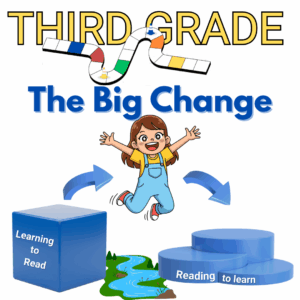
Remember what we’ve covered in the earlier posts in this series — By the time a child reaches third grade, it has to be assumed that reading instruction has basically been completed.
Beginning in third grade, learning depends on reading well.
This has always been the reality and the expectation, and that’s how it’s all designed.
But over time students who have not mastered reading have been pushed along in spite of their struggles. This has created a learning gap: Students who struggle to read are now struggling to learn.
Reading struggles are so common, that many students experience a new obstacle in learning that lasts for… well, forever.
But they have to push on. Repeating third grade isn’t feasible for everyone, and it really isn’t the answer anyway.
Because third grade isn’t the problem. Reading is.
And teachers aren’t the problem. Curriculum is.
From Theory to Impact
Now, educators are insisting that we recognize the gap and address it. And friends, the gap is already closing.
It’s the most exciting thing since the invention of the printing press.
As parents, we often view our children’s education as a small area of life — teachers, schools, parents… the world we see.
But remember — education is bigger than what we see.
First, it’s the foundation for future learning (and future earning).
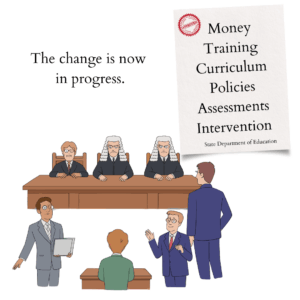
Second, education is a benefit of our government. That means elected officials and laws are a part of the picture also. Your State Department of Education — That’s who monitors and reforms education policy.
As mentioned, many States have now passed laws to make sure reading instruction is strong in grades K–2 because they understand how much is on the line.
Of course we now have a big question:
Who is supposed to fix it?
Before you blame any K-2 teachers, remember that each State is responsible for approving and implementing curriculum. Not each teacher. The States set all the standards, and teachers and students comply.
So, making changes is a big deal.
And this is the big thing I’ve been so excited about:
What’s The Miracle Story?
It’s an amazing story that restores your hope in government, schools, and humans. A lot of people got together and changed an outcome entirely. Not just a theory or an initiative — an accomplishment that made waves. Big ones.
A State made changes.
The Mississippi Miracle is the story that started it all. Mississippi made changes and implemented them, and showed their success to the world, rising from 49th in the nation for reading performance to 9th. Yes. Really.
When other states jumped on the success train, the story grew to be called The Southern Surge. This movement — called that because Southern states were leading the way — is actually good news. It’s schools trying to give every child the tools they need before third grade arrives.
One hero here is “The Science of Reading.”
What’s that? It’s not a person or a curriculum.
The Science of Reading is the body of research from cognitive science, psychology, and education that shows how people learn to read, emphasizing systematic instruction in phonics, phonemic awareness, vocabulary, fluency, and comprehension to ensure all students can become skilled readers. (Remember those “pillars” we covered in “Reading Foundations?”)
Now, Let’s Connect Third Grade Truths to Science of Reading.
If a child cannot read by third grade, the system will spend the next nine years trying to remediate a problem that could have been prevented in the first three.
Laws focus on third grade because:
- it’s measurable
- it’s predictive
- it’s actionable
- early intervention works
- later remediation is expensive, slow, and often ineffective
Mississippi’s model — and the broader “Southern Surge” — is built directly on this principle.
Science of Reading Explained –What Schools Are Changing
What does this mean for you?
- Your child may get more phonics-based instruction.
- You may hear more about decoding, blending, and “the brain science of reading.”
- Teachers may use new assessments that help spot trouble early.
- You might see reading intervention offered sooner (and more consistently).
And one more thing:
Periodic assessments may require additional intervention for your child.
What does that mean?
Intervention means extra instruction to catch up. Or tutoring. Or extra work.
Like you didn’t have enough to keep up with already, right? But pay attention. Because…
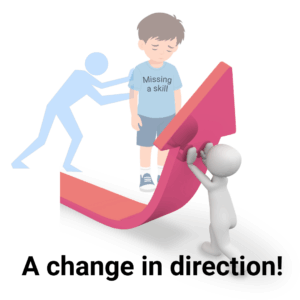
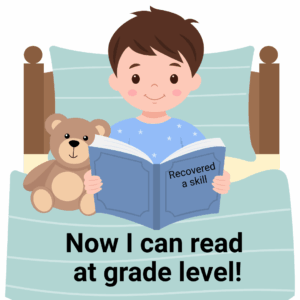
When every skill is being measured, it becomes crystal clear where the gap is. That means the gap can be closed by addressing the exact problem. Intervention means you’ll change the label from “missing a skill” to “all caught up.” Please be grateful for the opportunity to do exactly that.
Additionally, those assessments will weigh more heavily in advancing to the next grade or not. Because this improved way of doing things will insist that every student’s reading proficiency is on target by third grade.
Science of Reading — How Do I Find It?
If you’re like me, maybe you’ll poke around a little online and verify all this. Which is good!
One question I had was this:
What aligns with SoR? Which programs are similar, and which ones are different?
If I couldn’t answer this question, I’d keep stumbling into the dugout of the other team.
So let’s get clear on what it looks like and sounds like to research Science of Reading and its benefits.
First, the language of SoR includes words like this:
- Phonemic Awareness Instruction,
- Structured Literacy,
- Decodable Readers, Morphology Instruction,
- Vocabulary Instruction,
- Language Comprehension Instruction.
SoR strongly supports teaching phonics in a clear, planned sequence rather than through incidental exposure.
Which is…
Teaching letter–sound correspondences explicitly
Blending and segmenting practice
Decodable texts aligned with taught phonics patterns
Cumulative review
Programs that use this approach:
Orton–Gillingham, Wilson, SPIRE, Fundations, UFLI, Heggerty (phonemic awareness).
Those are the colors of the jerseys of our team.
How do you recognize promotion of other systems?
What does NOT align with the Science of Reading (and why)?
These methods rely on guessing or insufficiently explicit instruction:
Three-cueing / MSV (Meaning, Structure, Visual)
Balanced Literacy as traditionally implemented
Predictable readers for beginners
Teaching kids to memorize whole words by shape
“Let them discover the rules” approaches
It’s important to note that SoR doesn’t eliminate comprehension or rich literature—it just removes the teaching methods that harm accurate word reading.
Of course this is all “educator talk” and the details of all this will remind you (as they reminded me) that I’m a parent, a grandparent, and a community member, but I’m not an educator.
What Schools are Changing
Schools are changing how early reading is taught, and they are taking steps to bring students up to third-grade reading level by third grade.
That’s good news, that children will be assessed and brought to grade level before advancing to fourth grade.
Teachers are being given additional training and additional curriculum.
Sounds like an easy single event, but it’s not. It’s a huge transition. And some systems aren’t really giving adequate time for the change.
Like any big change — people have things to say — about the cost, the methods to get started, and the difficulty.
Teachers are definitely caught in the middle.
And now, let’s look at you, the parent.
Maybe you’re thinking that this doesn’t concern you.
Maybe… it sounds like…
Sounds Like Others Are Handling It
You may be tempted to “step back” and let the education system do their job. Sometimes maybe that’s how it seems like teachers can make us feel. Or maybe we make ourselves feel that way.
But don’t. Please don’t.
No one cares more than you do.
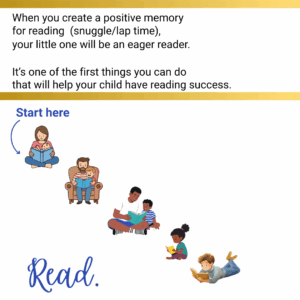
Simple conversations, silly games, reading books (even repeating them many times) and reinforcing letters and words — all of these are creating those amazing pathways in your child’s brain. There’s a lot of “sciency” talk about it, but the big message is this:
Your participation can be a game-changer for your child. And it’s not that hard! You may already be doing it.
Parents as Partners in Reading Success
Here are some concrete, research-backed ways parents can support reading under the Science of Reading approach:
Read aloud daily – Pick age-appropriate books and read together, emphasizing the sounds, rhythm, and meaning of words. Ask questions to build comprehension.
Practice phonics and letter-sound correspondence – Use flashcards, apps, or simple activities to help children connect letters to their sounds, mirroring classroom instruction.
Play sound and word games – Rhyming games, segmenting sounds in words, and “I spy” with beginning sounds strengthen phonemic awareness.
Support decoding practice – Encourage children to sound out unfamiliar words rather than guess, reinforcing the systematic phonics instruction they receive at school.
Build vocabulary – Introduce new words in context and encourage children to use them in sentences, helping comprehension and language development.
Encourage daily writing – Simple activities like labeling objects, writing short sentences, or keeping a journal help connect reading and writing.
Provide a print-rich environment – Keep books, labels, and other reading materials accessible at home to make literacy a natural part of daily life.
These activities are aligned with what cognitive science says about how the brain learns to read—systematic, explicit, and cumulative.
So, parental involvement directly reinforces what children are learning in school.
More about Science of Reading
Look, I know I’m dragging you deep into my world of reading education. You didn’t ask for it, and I’m putting all this stuff in your lap.
You’re full. You’re about to the point you tell the host, “I couldn’t eat another bite, thank you.”
But there’s just this one more part, and for me I’ll get excited sharing it.
Why?
Three separate things happened.
It all started with a podcast I listened to, called “Sold A Story.”
For whatever reason, the description intrigued me and I listened to the first episode. It was startling. And sad. And true. I was hooked.
“Sold a Story” is an investigative podcast by Emily Hanford that exposes how a disproven theory of reading instruction became the standard in many schools, despite scientific evidence to the contrary.
The podcast investigates the authors and publishing company that profited from this idea, and the negative consequences for children, including millions who struggle to read due to inadequate phonics instruction.
What Schools Are Changing
“Sold a Story” has spurred a national movement to change how reading is taught in schools, aligning it with the principles of Science of Reading. So that was the first thing that got my interest.
It wasn’t just knowledge for me. It was emotion.
Then later, the second thing happened:
A radio news/talk program I listened to covered The Mississippi Miracle. It was a focused look at the results of a determined effort. (Mississippi’s initiation of reforms actually preceded the publication of “Sold A Story.”)
I didn’t know anything about this Mississippi story. It was the second thing.
Having heard both things, I could feel the heady approach of an obsession coming. It was like I heard a bad story, followed by a good story.
Now, the third thing:
Talking with my sister, she listened attentively to all that I had discovered. Then she revealed that her dream job would be teaching people to read. 😄She is my sister and I didn’t know this was her dream.
These three things, plus many conversations with educators, really left me no choice. My heart wouldn’t settle until I shared this with you.
You don’t have to enter any of the “rabbit holes” I mentioned today.
But look at your own story.
What if…
- If you reviewed your own “reading learning” history, and that of your children and grandchildren, what would stand out?
- If you asked about your local schools, and what they were doing currently, what would you find?
- If you had a discussion with one person, or made one mention on social media, would you be taking a step toward encouraging literacy?
During this series, I’ll provide resources in case you want to do more learning about the support and encouragement you can provide to your child.
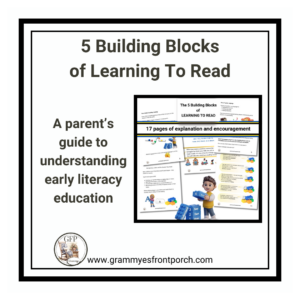
In fact, below is a link to a printable Parent Guidebook. This will give you more explanation, online resources, and actionable ideas. Just click on the link. You’ll be taken to a PDF document you can download and save or print.
Be Ready for More On This!
Wondering what you can do today?
Read with your child. Read a good story, or watch your child read. Smile, relax, and have fun. So valuable.
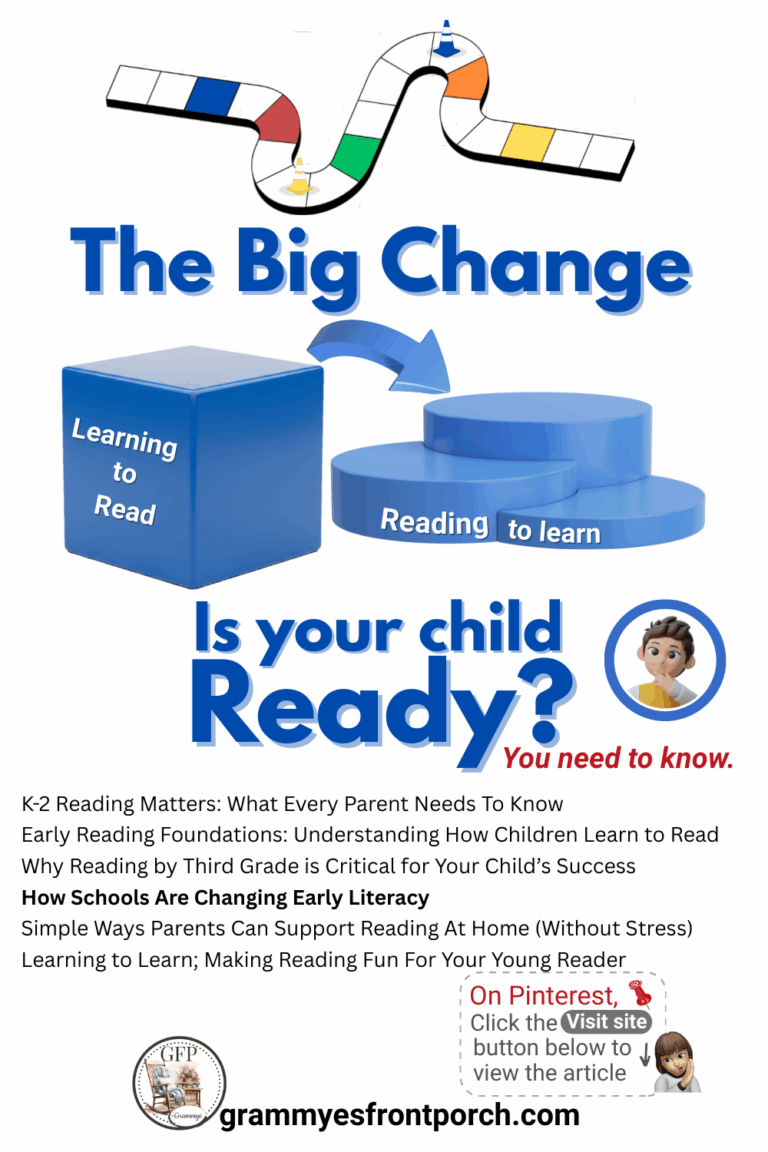
Here are the posts in this series. If the title is bold, it’s been published and you can access it with just a click. 😊
- How Schools Are Changing Early Literacy (The post you’re reading right now!)
- Simple Ways Parents Can Support Reading At Home (Without Stress)
- Learning to Learn; Making Reading Fun For Your Young Reader

By the way, 😎
Some of the products mentioned as links on this page are affiliate links. That means a merchant may give me a tiny reward if you buy something I recommended to you. Tiny rewards like that, plus the sale of my own products, help to reduce the ongoing cost of the blog. (Or, as my husband calls it, my expensive hobby. 😉)
Find out more about that here.
Parents of Kids in Grades K-2
Why the passion? Because reading is necessary for everything. And if we don’t support the learning when it’s being offered (grades K-2), the window closes fast. When your child’s teacher reviews reading progress with you, it’s super important.
Reading together at home is a proven difference-maker. Reading together daily is taking a giant step for your child. And that’s a way you love them.
Reading and phonics workbooks are amazing. Discover it all together, the building blocks to the joy of reading.
I’m saving tons of stuff for you on Pinterest. I have one board called Parenting and School, and there is a lot of good stuff there. (I 💖 Pinterest.)
Take a look at my fun workbook, Open Your Mouth, if you’re ready to get started. The cute little guy in the pictures on this page is your child’s host for a pretty wacky journey.
Thank you for visiting! At GFP company is always welcome!
 If you liked this topic, feel free to
  share
share  on Facebook or Pinterest, or send a link to a friend.

Are you on Pinterest? That is a crazy fun place! You can find so many helpful things. Take a look at what I’ve saved for you! A lot of things that never make it to the blog. Here are my Pinterest pins, and I have lots of categories/boards if you’re looking for something specific.
-Grammye
New here?
I’m Grammye, and I’m collecting and sharing ideas that can help you embrace the life you have.
When things are difficult, come here to refresh and relax. We’ll have coffee and talk.

You’re invited
to the neighborhood of GFP.
Accept by signing up
and I’ll send you a letter right away.
Subscribing to GFP is just like getting a magazine. Except it’s free! You won’t be asked for any payment information.
So say yes, then check your junk/spam mail in case the confirmation gets lost on the way!

This post may contain affiliate links. That’s a good thing. It means if you purchase a product I’ve highlighted, the seller may compensate me for that promotion. I love to share products that are a good value and make life easier. Those little commissions may add up, and can help to offset the cost of running the blog. Or maybe even create a little income. Click here to learn more about this.